
Article
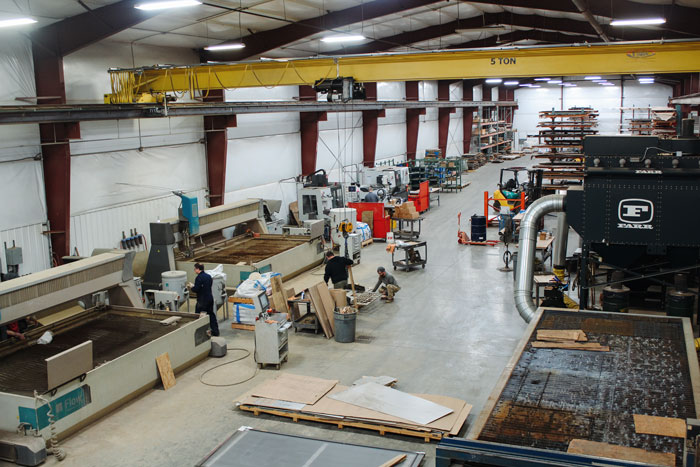
What Really Happens Inside a Spokane Metals Service Center
A walkthrough of how an order actually moves through our Spokane metals service center, from the front counter to the loading dock.
For decades, the “just-in-time” approach to metals procurement planning made perfect sense. You ordered what you needed, when you needed it, and kept carrying costs low. That model worked well in a world of stable prices and predictable lead times.
That world is gone — at least for now.
In 2026, the metals market is operating under conditions that punish reactive buying and reward buyers who plan ahead. If your shop is still running on a call-when-you-need-it model, this post is worth reading before your next project hits a delay.
The just-in-time model assumed two things: that material would be available when you needed it, and that the price you saw this week would be close to the price you’d see next week.
Neither assumption holds as reliably anymore.
Prices have moved sharply. As of early 2026, aluminum is up roughly 33% year-over-year and steel is up more than 20%. These are the largest year-over-year increases in several years. A quote you received three months ago may bear little resemblance to a quote you’d receive today.
Tariffs have tightened the import pipeline. Since mid-2025, the U.S. has maintained 50% tariffs on imported steel and aluminum under Section 232. In April 2026, those rules were revised again — expanding their scope and applying duties to the full customs value of covered products. The result is that imported metal and derivative products have become significantly more expensive to bring into the country, which puts more pressure on domestic supply.
Demand from major sectors is pulling hard on supply. AI data centers, grid modernization, EV manufacturing, and domestic infrastructure investment are all competing for the same aluminum and copper. That structural demand shift is real, and it’s not resolving quickly.
Together, these forces mean that material availability — not just price — is becoming a constraint for buyers who wait until the last minute.
You don’t need to be a Fortune 500 manufacturer to think more strategically about your material. In fact, for smaller shops and fabricators, small adjustments in timing and communication can make a meaningful difference.
Here are a few practical shifts worth considering.
Think in project horizons, not individual orders. If you have work lined up for the next two to three months, consider what metal you’ll need across those jobs — not just the next one. Even a rough forecast gives your supplier something to work with, and it gives you a better chance of locking in favorable pricing before it moves.
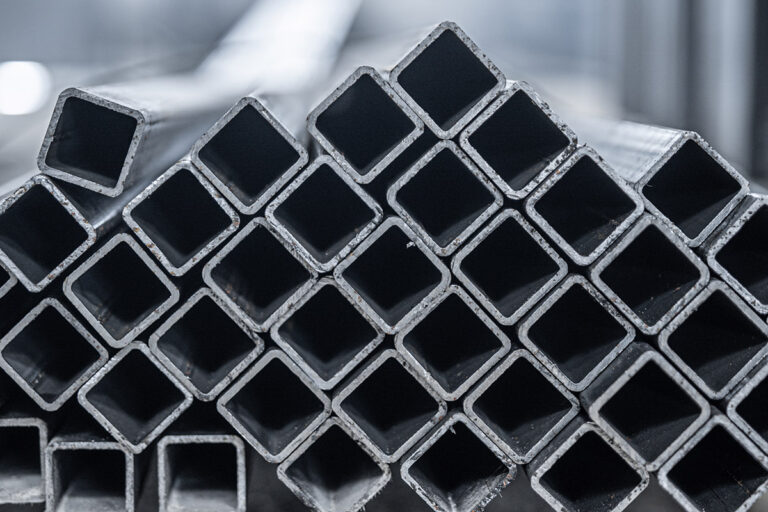
Understand which materials carry more risk. Not every metal needs the same procurement strategy. Commodity-grade steel in standard sizes may be available off the shelf. However, specialty alloys, non-standard dimensions, and tight-tolerance material are more likely to face lead times and allocation pressure. Those are the items worth planning further ahead.
Act on good quotes. Pricing windows are shorter than they used to be. If you receive a quote that works for your project, locking it in sooner is smarter than waiting to see if the market softens. In the current environment, waiting frequently costs more than it saves.
Build a relationship with your distributor, not just a transaction. In constrained markets, suppliers tend to take care of their regular customers first. Furthermore, a distributor who knows your business can flag issues before they become problems — whether that’s a looming lead time on a specific alloy or a substitution option that keeps your project on schedule.
We’re a regional metals distributor and service center based in Spokane, WA. We stock a broad range of aluminum, steel, stainless, copper, and specialty alloys, and we cut to size in-house — including laser cutting and waterjet fabrication.
That setup matters right now for a few reasons.
First, buying local means shorter, more predictable lead times. You’re not waiting on a warehouse across the country to ship standard sizes through a supply chain that’s under pressure.
Second, we can have real conversations with you about what you actually need. If a spec is hard to source, we can often suggest a substitution. If you have upcoming jobs you can tell us about, we can help you think through timing. That kind of back-and-forth is hard to get from a national distributor’s online order portal.
Third, we have a walk-in storefront. If you need material today — for a repair, a prototype, or a job that moved up — you don’t need to wait on shipping. Come in, tell us what you need, and leave with it.
We’re not going to tell you that metals procurement planning needs to be complicated. For most shops, it just means calling us a little earlier and giving us a little more information. We’ll take it from there.
Come see us at 4110 E. Trent Ave in Spokane. Walk-ins welcome. Or get a quote online anytime.
A walkthrough of how an order actually moves through our Spokane metals service center, from the front counter to the loading dock.
Every week, a drawing lands in our inbox for a laser or waterjet job, and it is not quite ready to cut. That is normal, and nobody here minds. Still,